
Water Around the Indoor Unit
Condensate drainage and other causes need to be inspected rather than assuming the drain is the only issue.
Air conditioning repair should start with a clear diagnosis rather than replacing parts from symptoms alone. Comfort Systems helps Perth homes and businesses investigate faults across split, multi-split, ducted and commercial HVAC systems — from poor cooling and weak airflow to leaks, unusual noise, controller issues and outdoor-unit problems. For local repair and service information in Rockingham, visit our air conditioning Rockingham page.
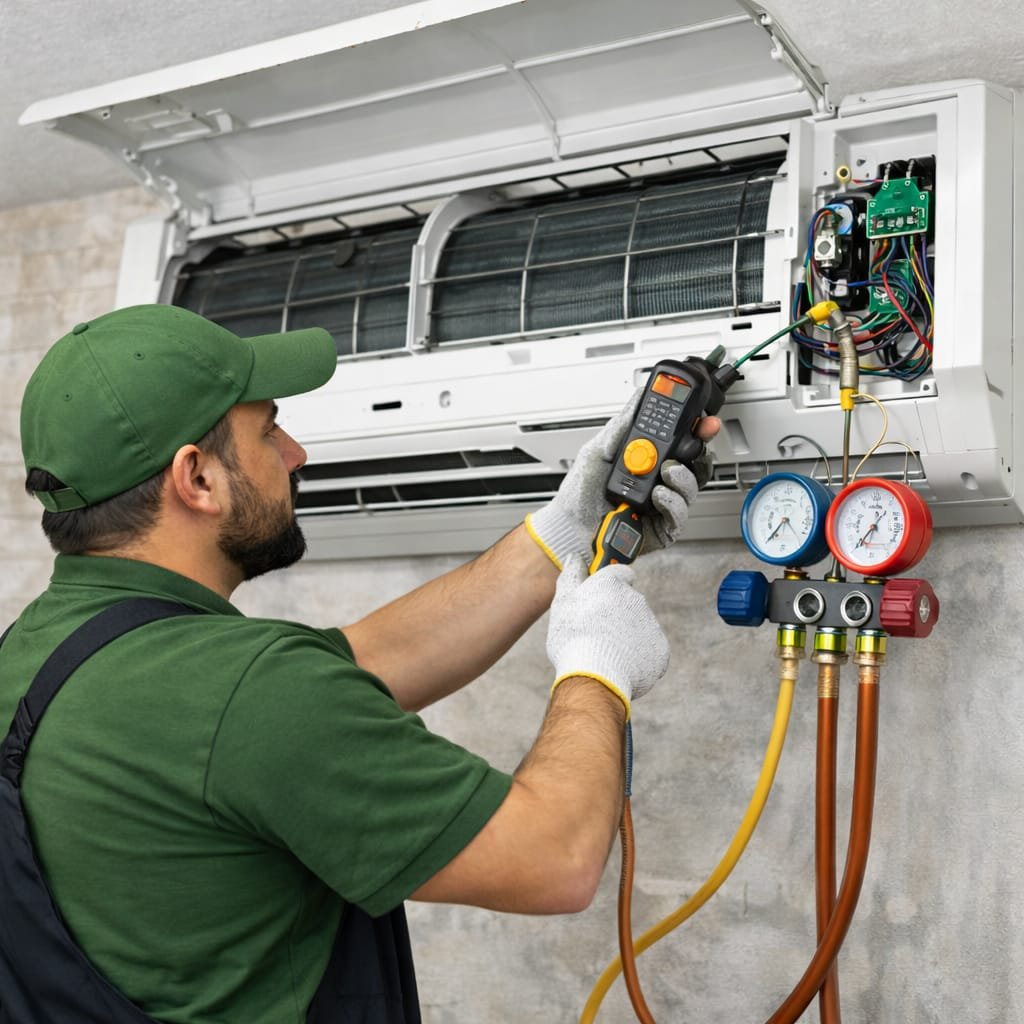
A fault signal is the starting point, not the diagnosis. Professional air conditioning repair starts by identifying which part of the system actually explains the change.
Possible investigation areas can include airflow, controls, indoor equipment, outdoor operation or the refrigeration circuit depending on the system and symptoms. For a symptom-led checklist, read our air conditioner not cooling Perth guide.
Condensate drainage and other causes need to be inspected rather than assuming the drain is the only issue.
New buzzing, rattling, grinding or vibration can come from different mechanical, electrical or installation-related causes.
Power, controls, protection devices and system faults can all affect startup.
A useful air conditioning repair pathway narrows the problem down before parts are replaced or larger decisions are made.
What changed? Is the system not cooling, leaking water, noisy, intermittent, unresponsive or affecting only one zone?
During air conditioning repair, inspect indoor equipment, outdoor equipment, controls, visible installation conditions and accessible airflow or drainage components based on the symptom.
Electrical, control, airflow and refrigeration-related checks may be relevant depending on the system and observed behaviour. Refrigerant handling should stay within the appropriate licensing framework; see ARCtick / Australian Refrigeration Council.
Separate a confirmed repair issue from maintenance, installation, design or replacement considerations. For routine care, use our air conditioning maintenance guide.
After air conditioning repair work is completed, the affected system or zone should be checked again rather than assuming replacement of a component solved the whole issue.
Indoor symptoms can originate indoors or outdoors. Effective air conditioning repair may need to follow the complete system rather than the location where the problem is first noticed.

Indoor fault finding can involve controller response, fan operation, airflow restrictions, drainage and internal electrical components. See our split system air conditioning Perth guide for system-specific context.

Outdoor equipment contains electrical and refrigeration components that can affect the performance of the entire connected system. In Western Australia, electrical work must stay within the relevant licence scope; see the WA Government refrigeration and air-conditioning electrical licence guidance.
Similar symptoms can require very different air conditioning repair paths depending on whether the equipment is a single split, multi-room system, ducted installation or commercial HVAC system.
Indoor operation, outdoor condenser, controls, drainage, airflow and connected refrigeration components can all form part of diagnosis.
Determine whether the issue is isolated to one indoor unit or connected to the shared outdoor system or controls.
Diagnosis can extend through concealed equipment, filters, return air, zone controls, duct airflow and outdoor plant. For system architecture, see ducted air conditioning Perth.
Commercial faults may involve larger plant, multiple occupied zones, central controls and business-critical operating requirements.
A replacement discussion makes more sense after the fault, equipment condition, air conditioning repair practicality and the property's future needs are understood. Compare both pathways in our repair vs replace air conditioner Perth guide.
Where a confirmed fault has a practical repair pathway and the system still suits the property. When replacement is being compared, use the Australian Government Energy Rating guidance to compare suitable heating and cooling equipment.
Where repair practicality, repeated faults or changed property needs make a new system worth considering.
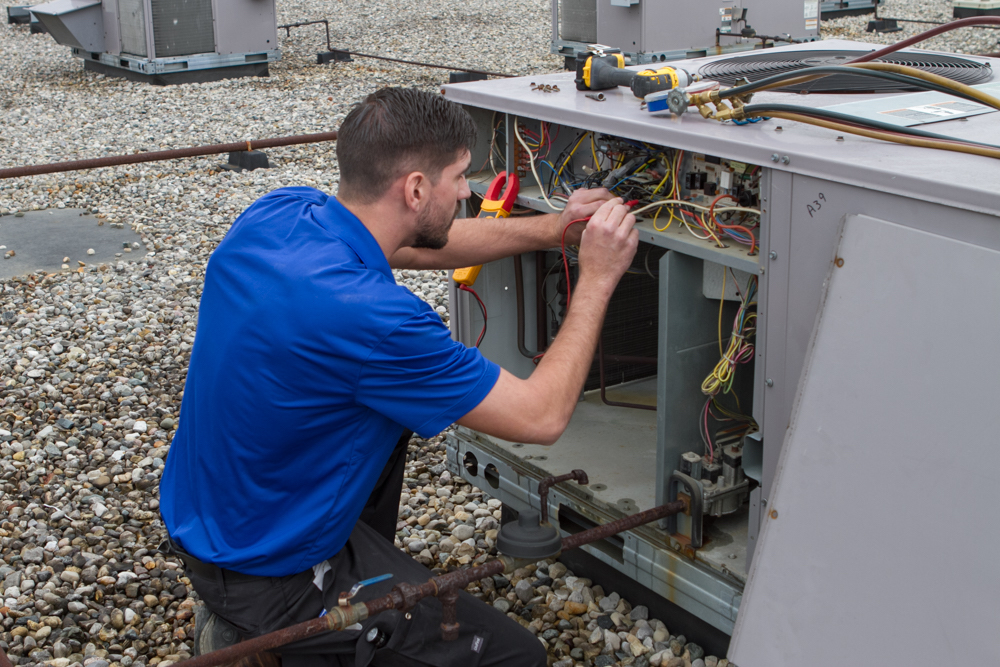
Commercial HVAC repair can involve several spaces and longer operating hours, so diagnosis should consider whether the issue is local to one zone or connected to shared plant or controls.
Find out whether one space or several spaces are experiencing the same issue.
Zone or central controls may form part of the fault path.
Rooftop, ceiling or plant-room equipment may serve more than one area.
Confirm the affected system or zone responds appropriately before handover.
Symptoms can overlap, so useful air conditioning repair decisions generally start with diagnosis rather than assuming one specific component has failed.
There are several possible causes, including airflow restrictions, control issues, indoor or outdoor component faults and refrigeration-system problems. Diagnosis is needed to identify the actual cause.
Indoor water can be associated with condensate drainage or other operating issues. The source should be identified rather than assuming the drain is the only possible cause.
Rattling, buzzing, grinding or vibration can have different mechanical, electrical or installation-related causes, so a persistent new sound should be investigated.
Depending on the fault and equipment, ducted systems can have repair pathways involving concealed indoor equipment, controls, filters, zones, airflow or outdoor equipment.
The actual fault, repair practicality, equipment condition, parts availability, recurring issues and whether the system still suits the property should all be considered.
Comfort Systems supports residential and commercial heating and cooling pathways across split, multi-split, ducted and commercial HVAC applications. Commercial projects can also review our commercial air conditioning Perth page. The appropriate repair approach depends on the installed system and diagnosed fault.
Tell Comfort Systems what type of system you have, what the system is doing now and what changed. A clear description creates a better starting point for professional diagnosis.