
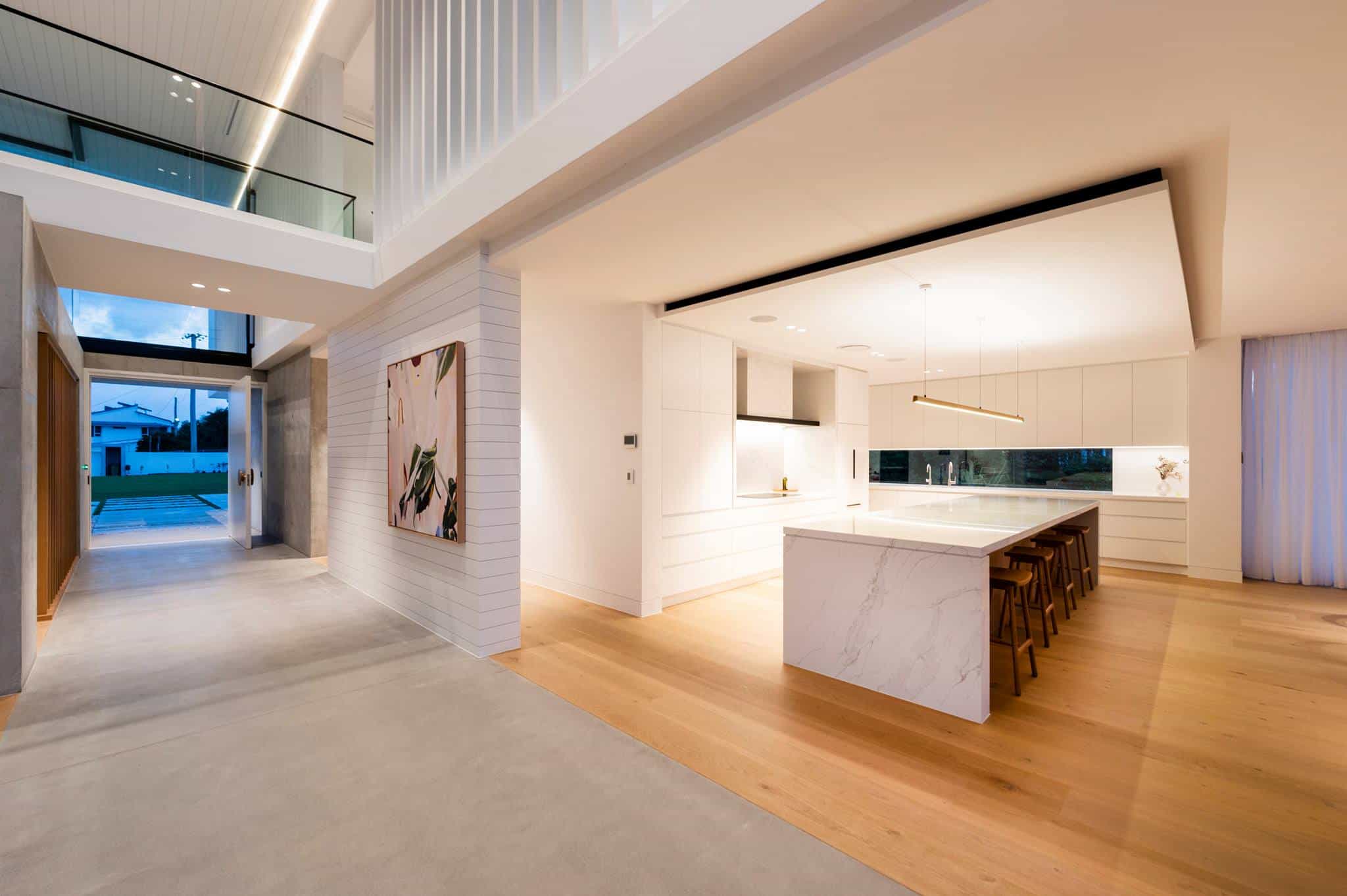
Below the ceiling
Architectural Outlets and Clean Sightlines
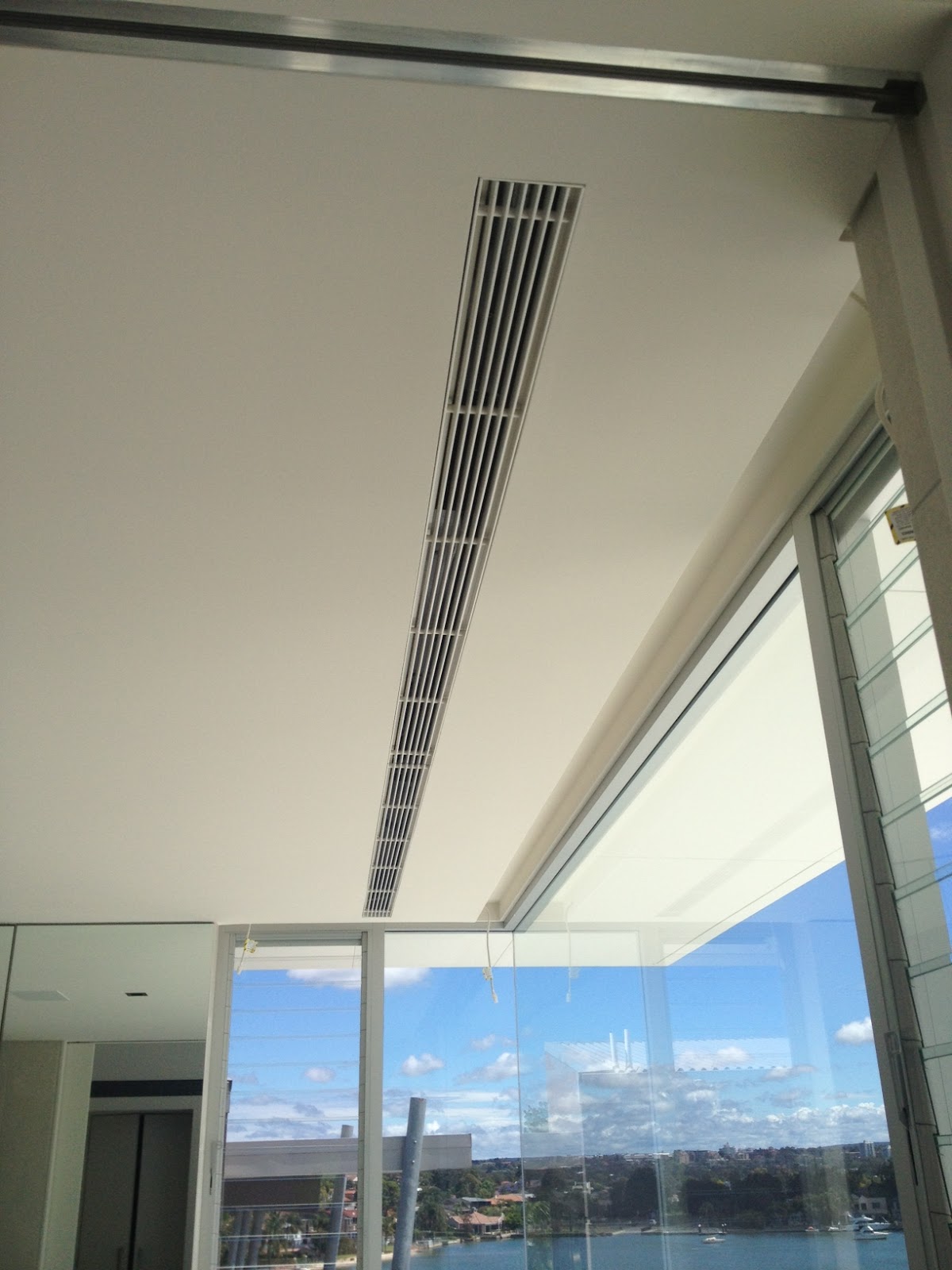
The visible elements can be limited to grilles, diffusers, return-air openings and controls selected around the interior.
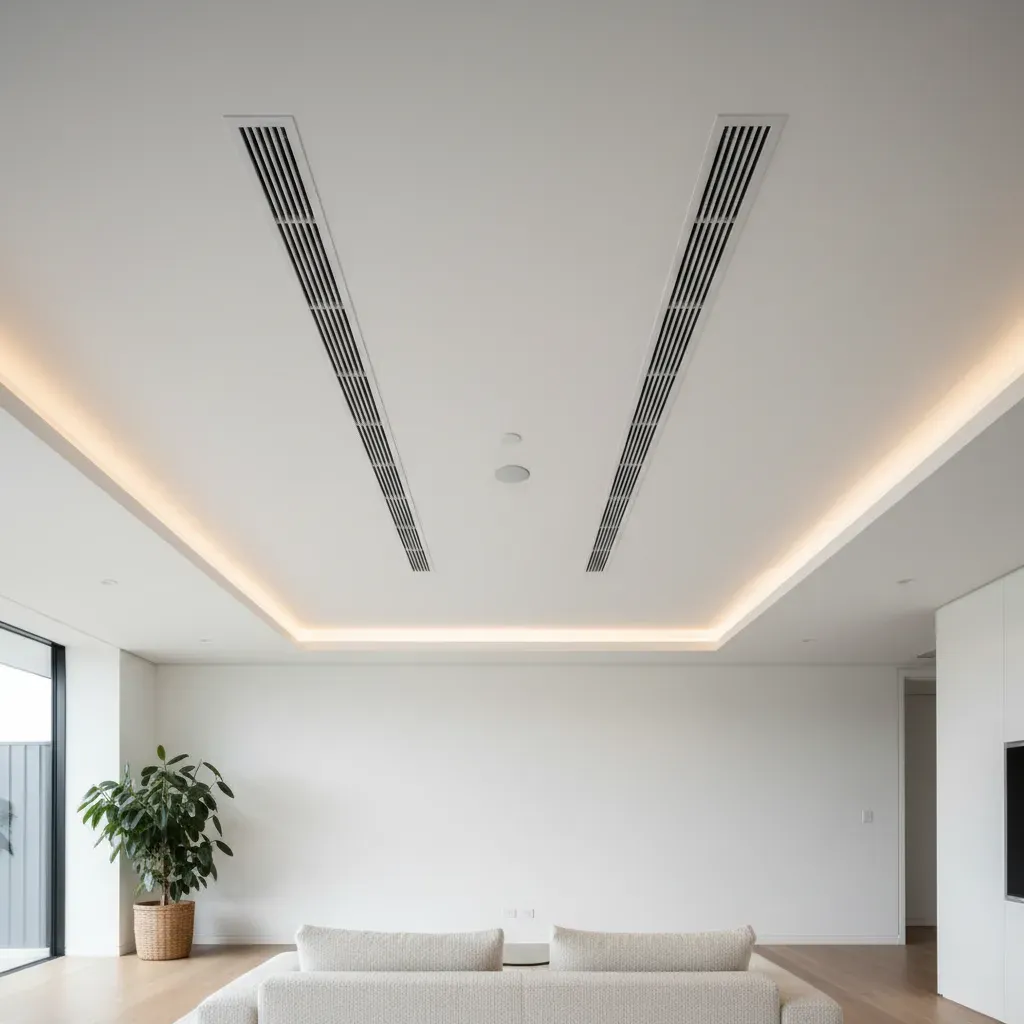
Comfort Systems helps Perth homeowners explore reverse-cycle ducted air conditioning for multiple rooms and whole-home comfort — with concealed indoor equipment, carefully planned ductwork, discreet ceiling outlets and zoning options where the selected system supports them. For local southern-suburb guidance, see air conditioning Rockingham.
The performance pathway sits above the ceiling: indoor unit, duct routes, air distribution, returns, controls and access.
The finished room can look simple because the working system is concealed. Ducted air conditioning uses a central indoor unit connected to insulated ductwork that distributes conditioned air through outlets in selected areas.
The visible elements can be limited to grilles, diffusers, return-air openings and controls selected around the interior.
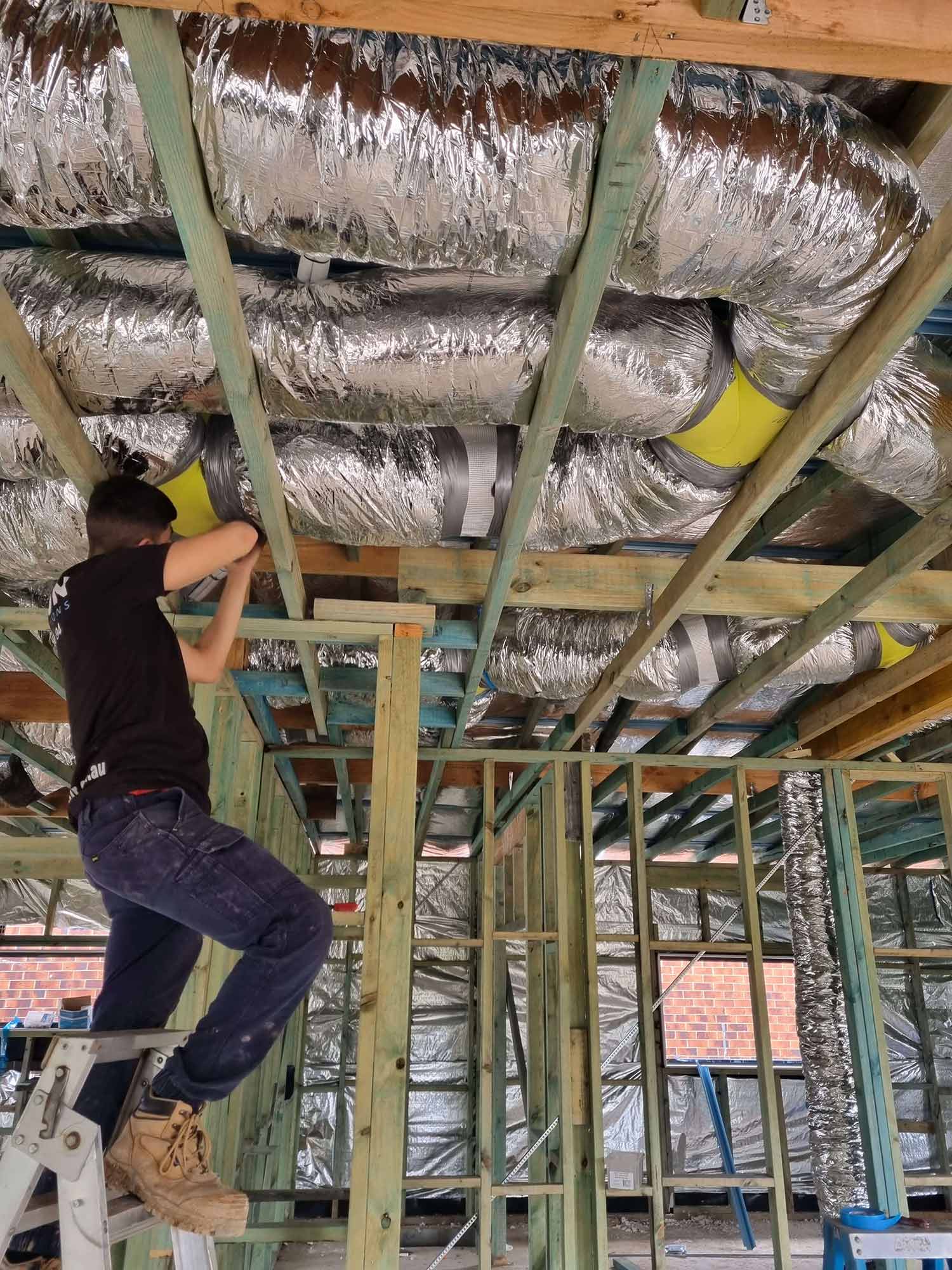
Behind the finished ceiling sits the system architecture that carries conditioned air to the selected spaces.
A ducted system is not just an outdoor unit and a ceiling vent. The complete airflow path needs to be planned so the system can serve the intended areas and remain practical to operate and maintain.
The concealed indoor unit conditions the air before it is distributed through the duct network.
Duct routes carry conditioned air through the ceiling or other available building cavities.
Supply outlets deliver conditioned air while the return-air pathway allows air to circulate back through the system.
Compatible controls can manage temperature, schedules and zoning depending on the selected ducted system and zoning solution.
Compatible zoning systems can divide a ducted installation into selected areas. The available level of control depends on the equipment, controller and zoning solution, so zoning should be planned as part of the system rather than treated as an afterthought.
Daytime spaces may operate on a different schedule from bedrooms.
Night-time comfort can create different operating priorities.
A workspace may need conditioning when other areas are not in use.
Compatible zoning can provide control over which selected areas are enabled, subject to system design.
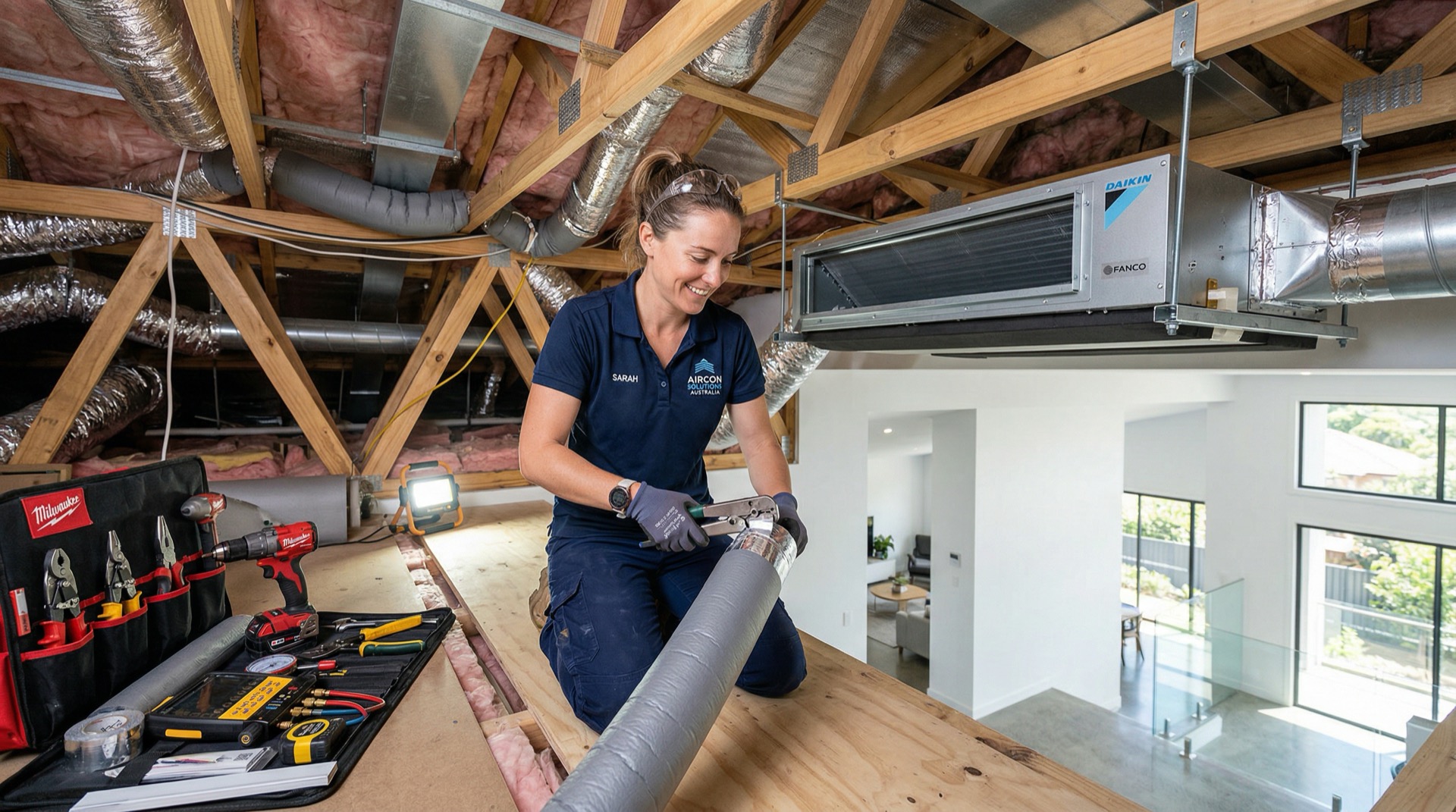
Roof and ceiling space, access, indoor-unit location, duct routes, return-air position, outlets and outdoor-unit placement all influence the final installation. New builds and renovations can offer more design freedom, while existing homes require planning around what is already there.
Review the areas to be conditioned, construction, roof space, access and equipment locations.
Consider indoor-unit position, duct routes, outlets and return-air requirements.
Confirm compatible controller and zoning requirements before finalising the system configuration.
Equipment should remain practical to inspect and maintain after the installation is complete.
Outlet style and placement form part of the finished visual result. The appropriate grille or diffuser still needs to support the required airflow and system design.
Comfort Systems works with three manufacturers that currently offer ducted heating and cooling solutions in Australia. Product selection should follow the property's needs, available space, required capacity, controls and zoning requirements.
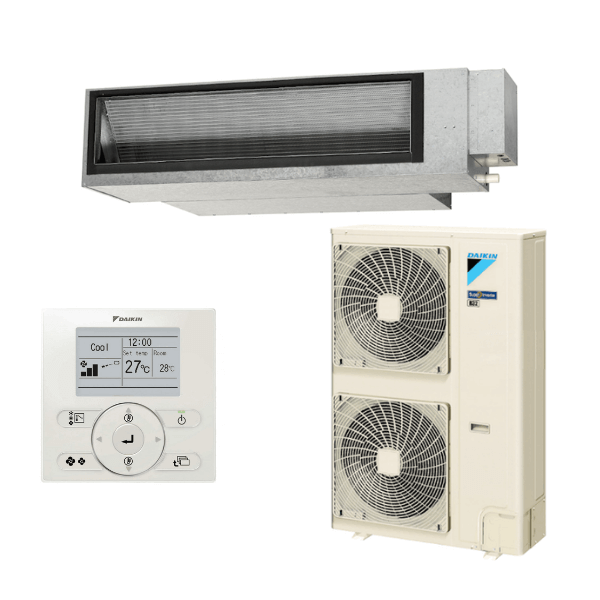
Daikin Australia's current Premium Inverter ducted range is reverse-cycle and spans listed capacities from 7.1kW to 24.0kW, with models intended for discreet whole-home air conditioning.
Daikin also lists Inverter Ducted and Slim-Line Ducted options for different capacity and ceiling-space requirements.
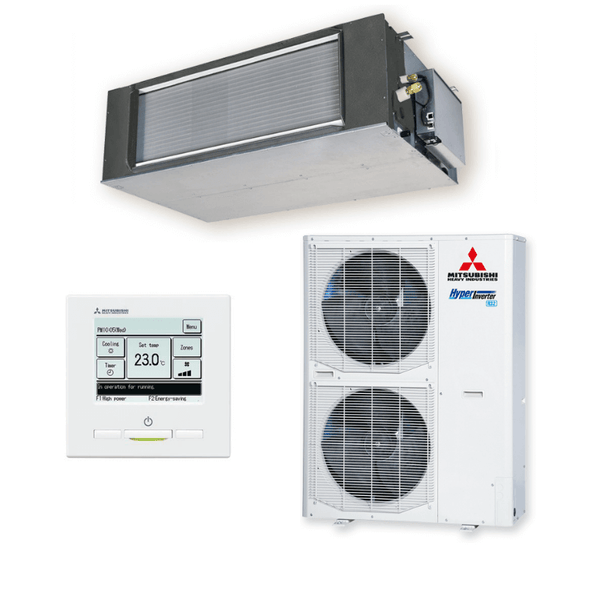
MHIAA currently offers FDU and FDUA ducted systems across a range of capacities. Its residential FDU range spans 7.1kW to 14.0kW, while FDUA extends into larger listed capacities.
Current features vary by series and can include timer functions, quiet-operation modes and compatible zoning solutions.

Midea Australia currently lists its Vesta ducted system as a ceiling-concealed heating and cooling solution with zoning-control and smart-control options described in its Australian product information.
Midea positions ducted air conditioning for concealed whole-home comfort with multiple control and installation features.
Ducted is an excellent system format for suitable homes, but the property still needs to support the equipment and air-distribution pathway.
The more areas that need coordinated heating and cooling, the more relevant a central ducted approach may become.
CoverageThe indoor unit, ductwork and associated components need appropriate concealed space and access.
SpaceOutlet location needs to support airflow while fitting the architectural layout of the room.
AirflowCompatible zoning should be discussed early because controls and system design need to work together.
ControlNew builds and renovations may provide more flexibility for concealed services than completed homes.
ProjectThe finished installation should retain practical access to equipment that needs inspection or maintenance.
AccessThe best ducted result comes from matching the system to the property rather than treating every home the same.
A ducted system uses a central indoor air conditioning unit connected to concealed ductwork. Conditioned air is distributed to selected rooms through outlets, while a return-air pathway allows air to circulate back through the system.
Yes. Reverse-cycle ducted air conditioning systems can provide both heating and cooling. Exact performance, operating limits and controls vary by model and system design.
Compatible ducted systems can be paired with zoning solutions that control selected areas of the home. The number of zones and level of temperature control depend on the selected equipment, controller and zoning platform.
It can be, provided the property has suitable space and access for the indoor unit, ductwork, outlets and return air. Existing construction can place more constraints on installation than a new build or major renovation.
A wall-mounted split system typically conditions a room or defined area from a visible indoor unit. Ducted air conditioning uses concealed ductwork to distribute air to multiple selected areas from a central system.
Comfort Systems works with Daikin, Mitsubishi Heavy Industries Air-Conditioners and Midea. The appropriate ducted product range depends on the home's capacity, space, control and installation requirements and current Australian product availability.
Tell Comfort Systems which areas you want to heat and cool, whether the property is existing, being renovated or still in design, and whether zoning or a particular outlet style matters to the finished result. For an installation budget and a clear quote checklist, read our 2026 ducted air conditioning cost guide for Perth.