
Occupied Areas
Identify which spaces depend on each system and when those areas are normally in use.
Comfort Systems helps Perth businesses plan preventative air conditioning maintenance across rooftop units, ducted systems, ceiling cassettes, VRF/VRV and multi zone commercial HVAC with attention to filters, coils, drains, controls, plant access and system operation.
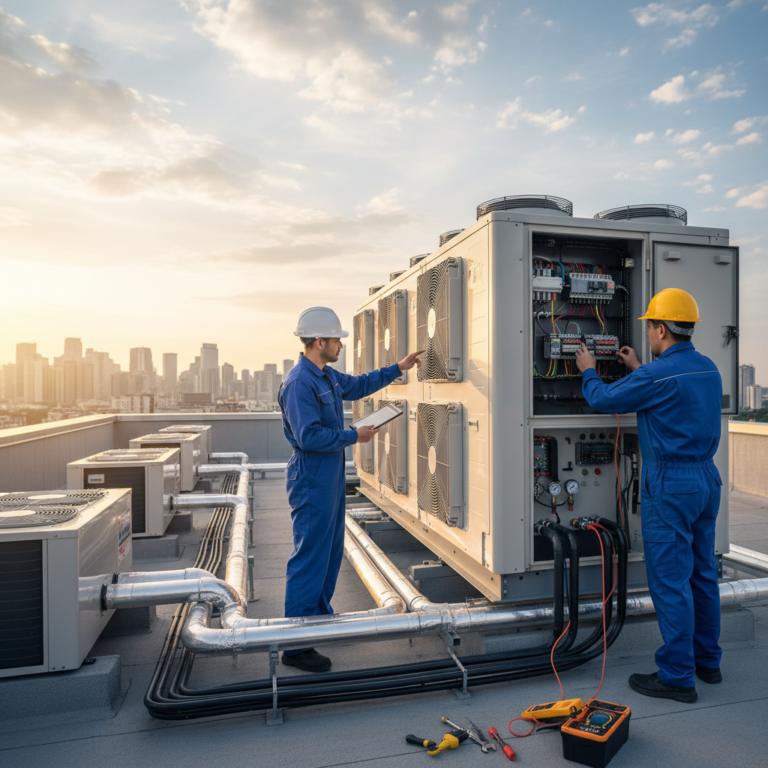
Commercial sites can contain several HVAC types, multiple zones and equipment in different service locations. The maintenance scope should reflect the actual assets serving the premises.
Rooftop plant, indoor fan coils, ceiling cassettes, filters, controls, ducts and shared VRF/VRV systems may all contribute to the same occupied environment.
Identify which spaces depend on each system and when those areas are normally in use.
Rooftop, ceiling and plant room equipment needs practical maintenance access.
VRF, cassette, ducted and packaged equipment can require different service attention.
Usage and site conditions influence how a maintenance plan should be approached.
The exact checks depend on the installed equipment, but commercial maintenance commonly spans indoor air pathways, external plant and the controls that connect occupied zones to the HVAC system.
Review the components that move and condition air inside the premises.
Commercial systems also depend on condensate management and operating controls.
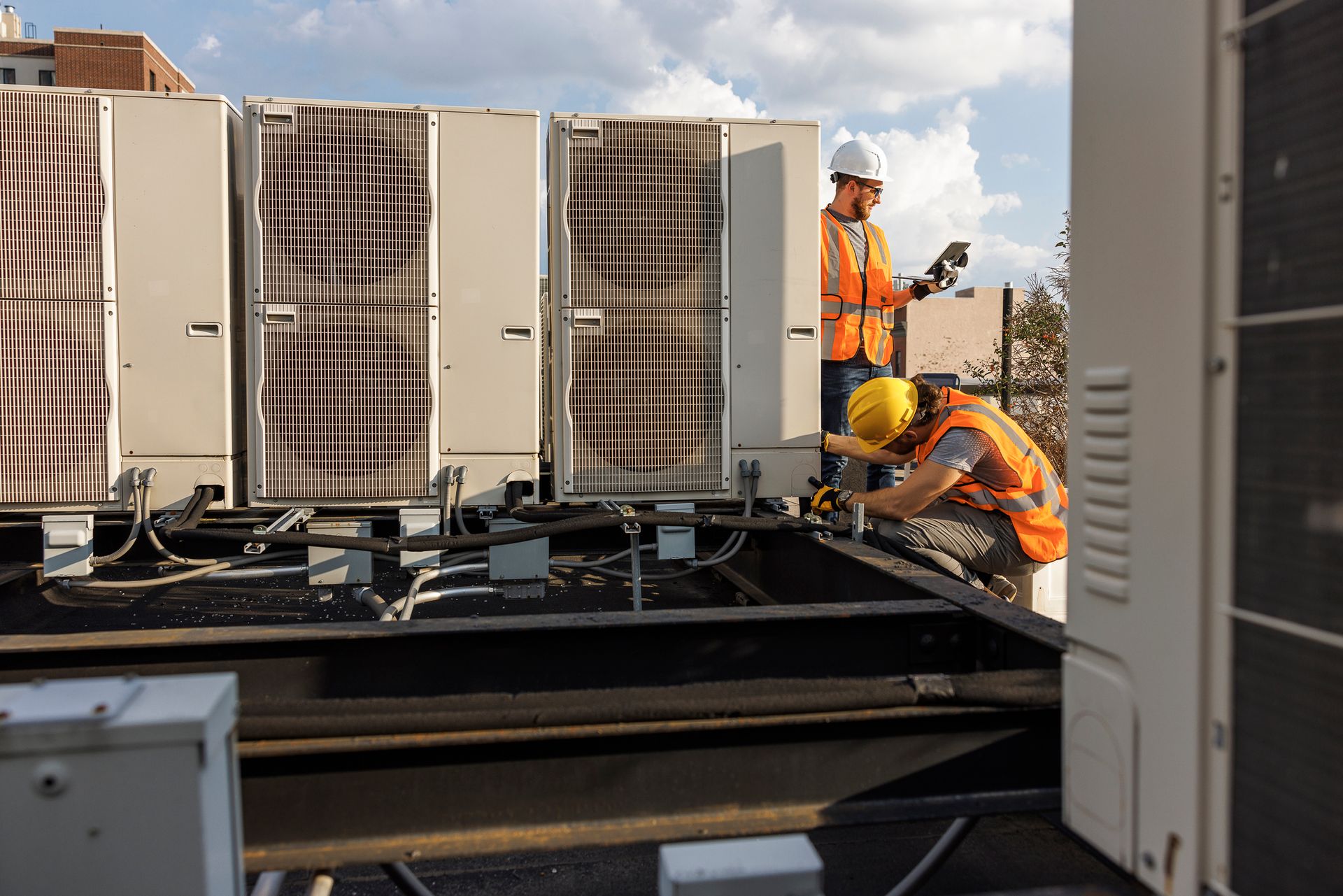
External equipment needs adequate airflow, access and operating checks.
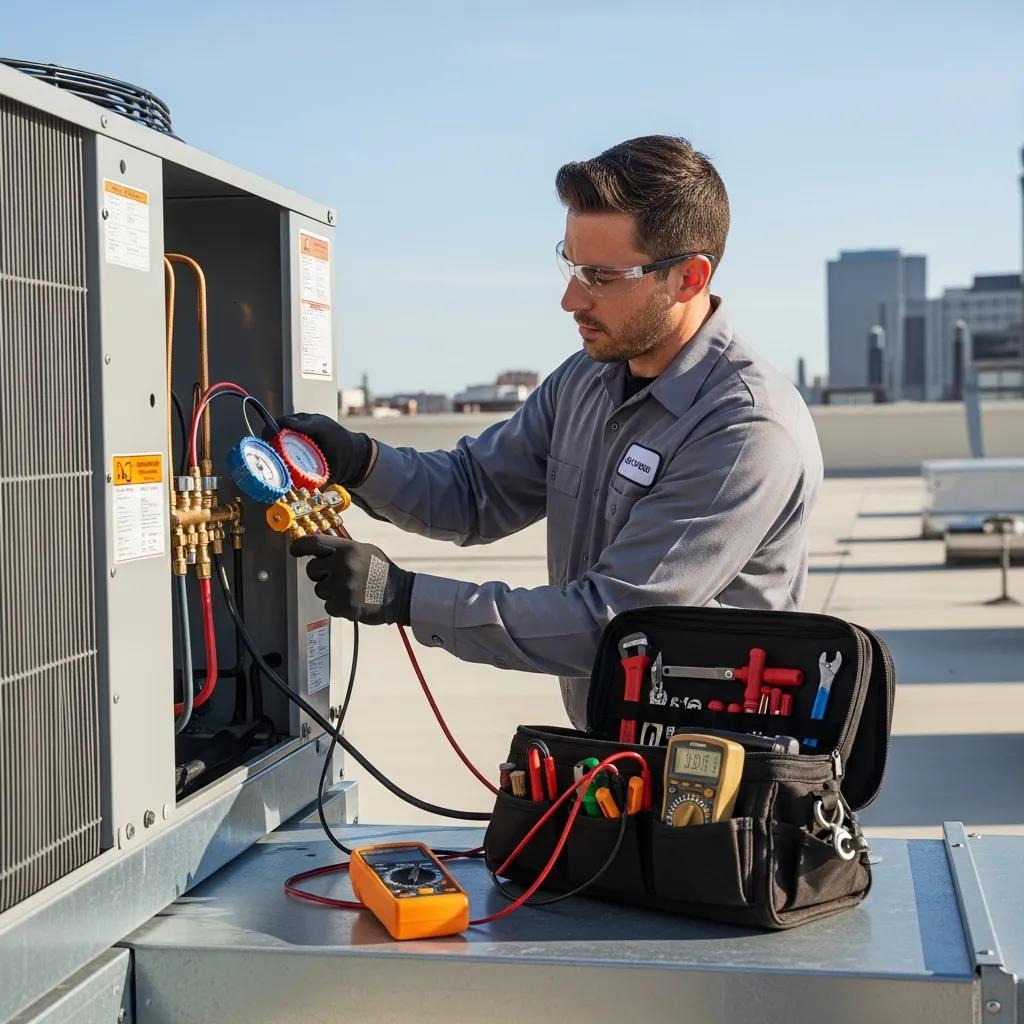
VRF/VRV and other multi zone systems can connect several indoor units to coordinated outdoor equipment. A fault or maintenance issue can therefore involve one zone, several zones, controls or shared outdoor plant.
Note whether a change is isolated to one indoor unit or appears across several spaces.
Outdoor modules and controls can influence multiple connected indoor units.
Rooftop and plant areas should remain practical for ongoing maintenance.
After service, affected zones should be checked in the context of the broader system.
Commercial systems do not all live on the roof. Ceiling cassettes, fan coils and air handling equipment can sit above occupied spaces or within dedicated plant areas.
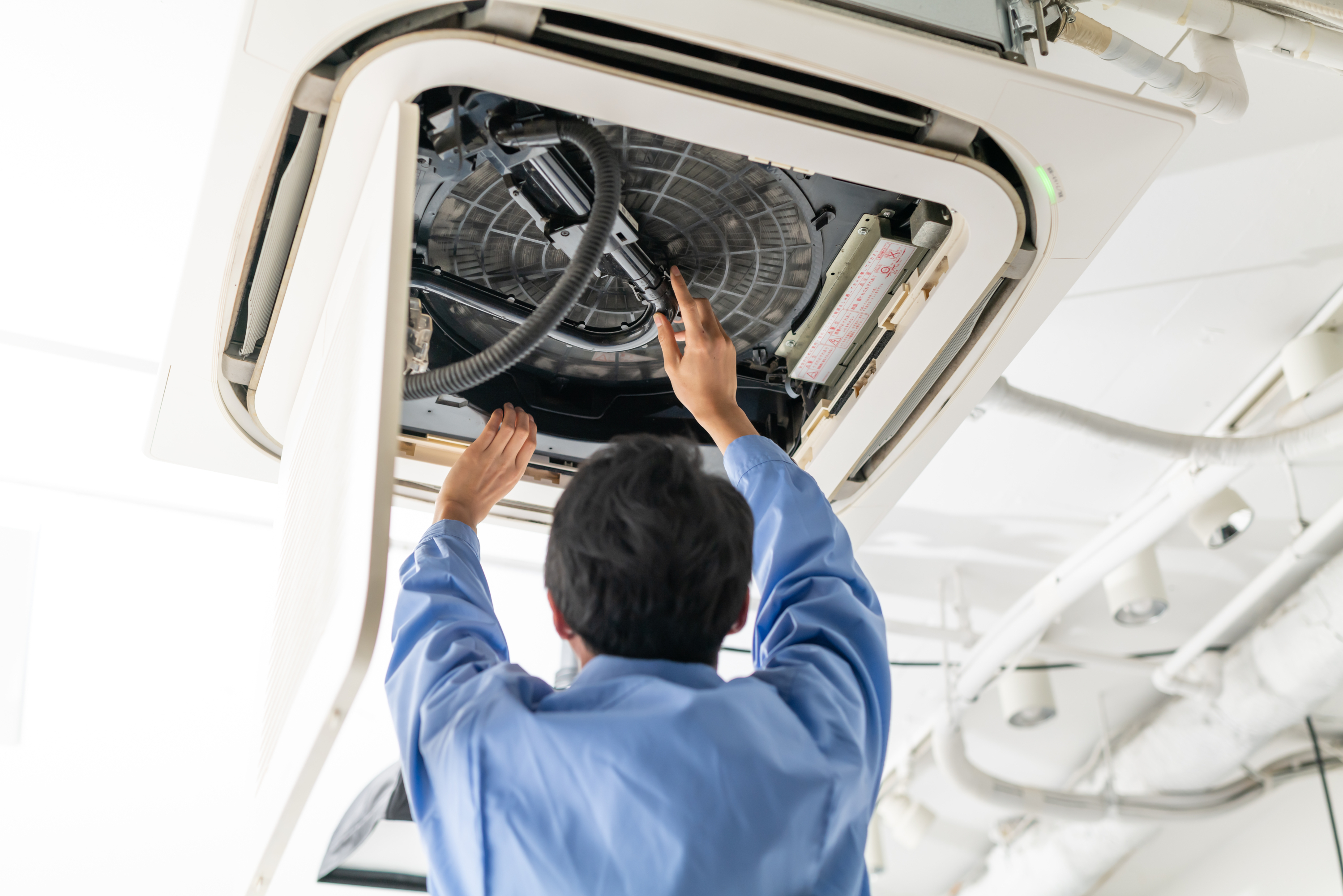
Access, filters, fan components, drainage and controls can all form part of cassette maintenance depending on the system.
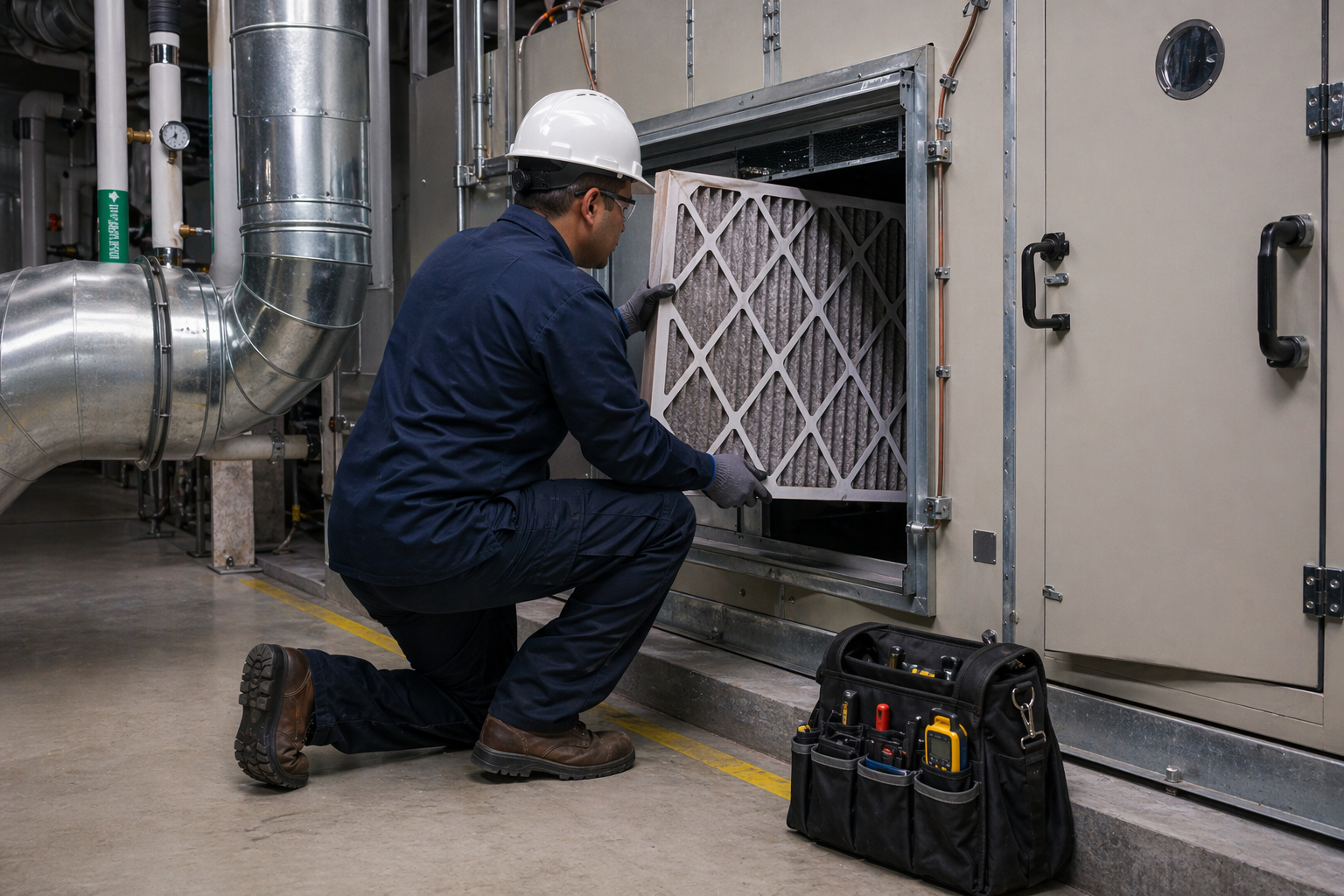
Commercial air handling equipment can require larger filters and dedicated mechanical access compared with room level systems.
There is no single maintenance interval that suits every commercial system. The useful plan should account for equipment type, operating hours, environment and manufacturer guidance.
Identify the equipment and zones that need to be included in the commercial maintenance scope.
Consider business hours, occupancy, heat loads, environmental exposure and how heavily each system is used.
Define relevant filter, coil, drain, control, indoor unit and outdoor plant checks for the installed systems.
Plan access around the premises where equipment location or occupied areas make timing important.
Keep maintenance observations useful for future servicing, recurring issues and repair decisions.
A quiet office, busy hospitality venue and warehouse can place very different demands on HVAC. Maintenance planning should respond to the equipment and operational environment rather than treating every site the same.
Multi zone comfort, ceiling equipment and normal occupied hours can shape access and service planning.
Customer facing areas may need service planning around trading and equipment access.
Operating hours, internal heat and occupied zones can influence maintenance priorities.
Plant location, larger zones and differing operating conditions may require a broader asset view.
Preventative maintenance cannot eliminate every fault, but it creates structured opportunities to inspect and clean equipment before problems are only noticed through loss of comfort or operation.
Service begins after occupants or staff notice a problem in the conditioned space.
Maintenance is planned around the equipment, site and operating context before a specific fault necessarily appears.
The right maintenance scope depends on the installed equipment, operating environment and how the premises uses its heating and cooling systems.
The exact scope depends on the system. Common maintenance areas include filters, accessible coils and surfaces, condensate drainage, indoor airflow, controls, outdoor condenser condition, plant access and general operating checks.
There is no single interval that suits every commercial site. Equipment type, usage, operating hours, environment and manufacturer guidance should all be considered when establishing a maintenance plan.
Multi zone systems include several indoor units, controls and shared outdoor plant, so planned maintenance can be useful for reviewing connected equipment and identifying whether an issue is local to one zone or wider across the system.
Yes. Ceiling cassettes include filters, fan and coil components, condensate drainage and controls. The exact service work depends on the cassette model, condition and access.
Commercial systems may run for longer hours and serve multiple occupied areas. Planned maintenance creates structured opportunities to inspect, clean and review equipment before every service need is triggered only by a breakdown or comfort complaint.
Comfort Systems supports commercial heating and cooling pathways across ducted, cassette, multi zone and commercial HVAC applications. The appropriate maintenance scope depends on the installed equipment and site requirements.
Tell Comfort Systems what type of premises you operate, what HVAC systems are installed and which areas depend on them. That creates a stronger starting point for defining the equipment, access and maintenance scope.